01 · Seal
China
Surveys treat Chinese civilization as very old and many-stated. The People's Republic of China is the government of mainland China today. This page does not pick a dynasty as destiny.
An original geometric mark for this room. It is not a historical seal, a flag, or an artifact. This opening is a still, moved slowly as you scroll. A film for this seal is not in the library yet.
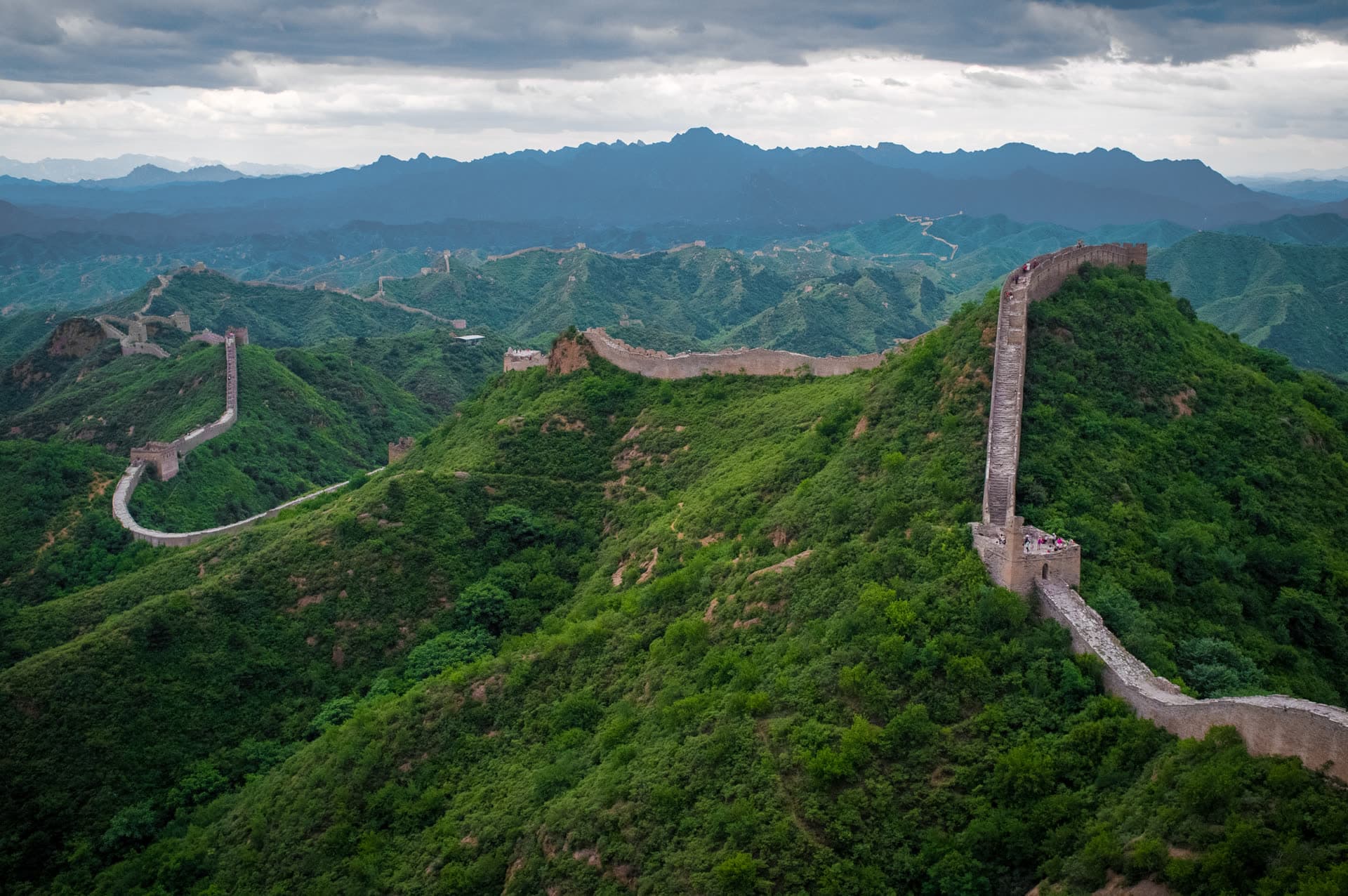
The Great Wall at Jinshanling. A photograph of the wall. No dynasty is named the peak. CC BY-SA 3.0 · Severin.stalder
02 · Founding
Founding
Early Chinese states are placed by surveys along the Yellow River. Dates for the first dynasties are not settled to a single year in every account.
No dynasty date is stated.
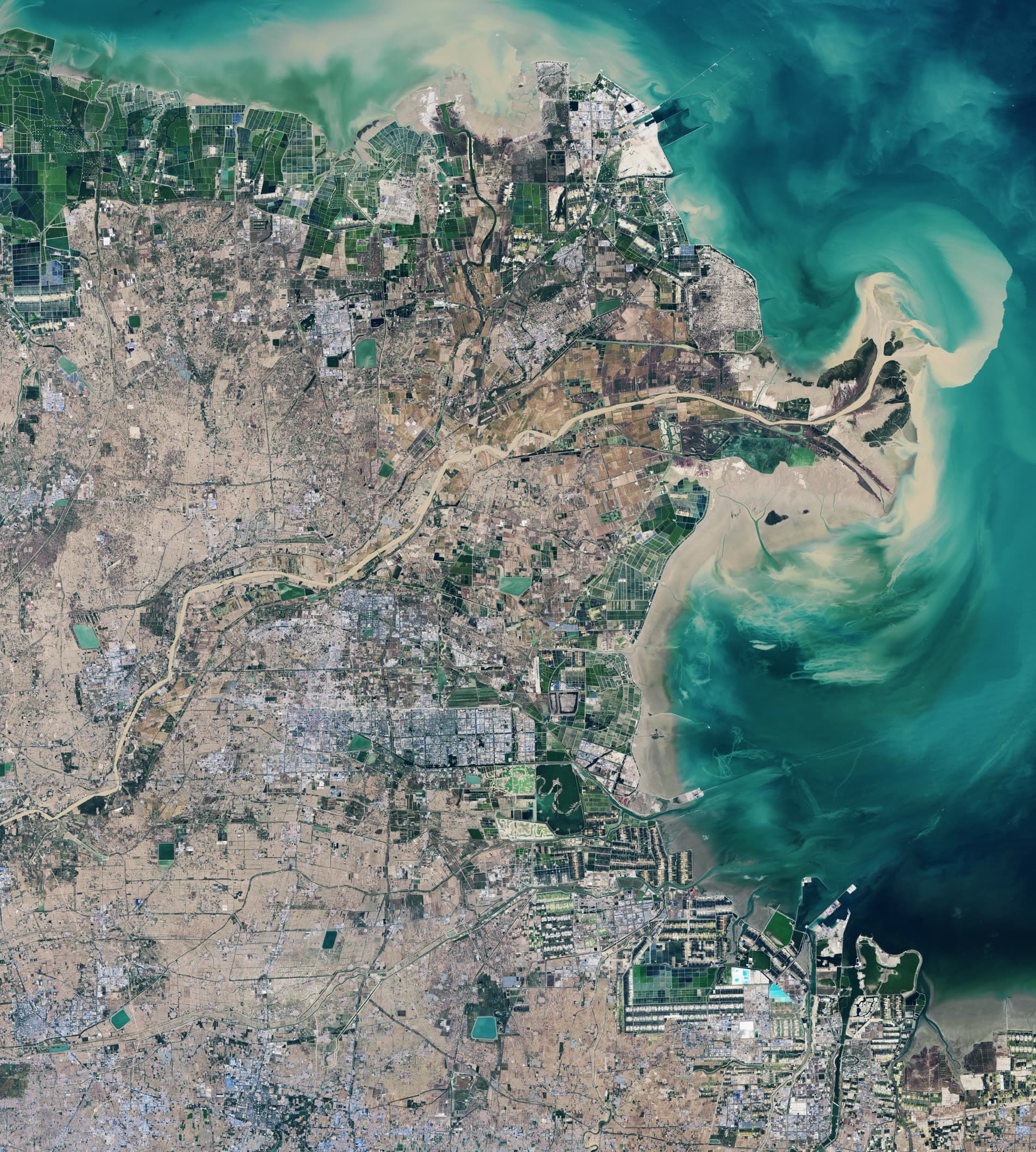
The Yellow River delta, from Landsat, assembled by NASA Earth Observatory. A modern satellite view of the river system surveys connect to early Chinese states. Not a dynasty date. Public domain · NASA Earth Observatory / USGS Landsat
03 · Peak
Peak
Historians name different dynasties as high points of power, writing, or territory. Choosing one peak is an interpretation.
No imperial seal is copied onto this mark.
The Great Wall at Jinshanling. A photograph of the wall. No dynasty is named the peak. CC BY-SA 3.0 · Severin.stalder
04 · Object
Two objects
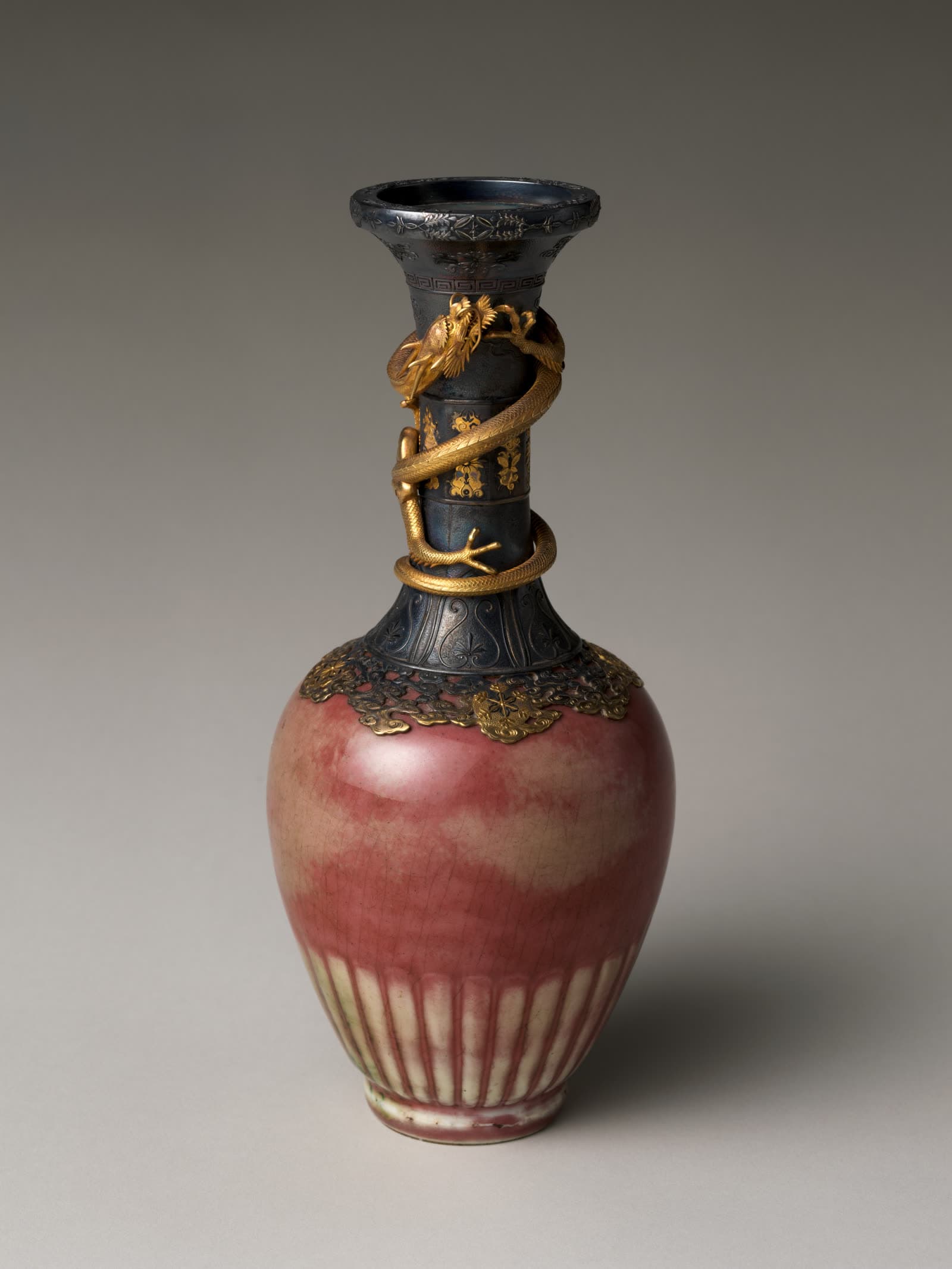
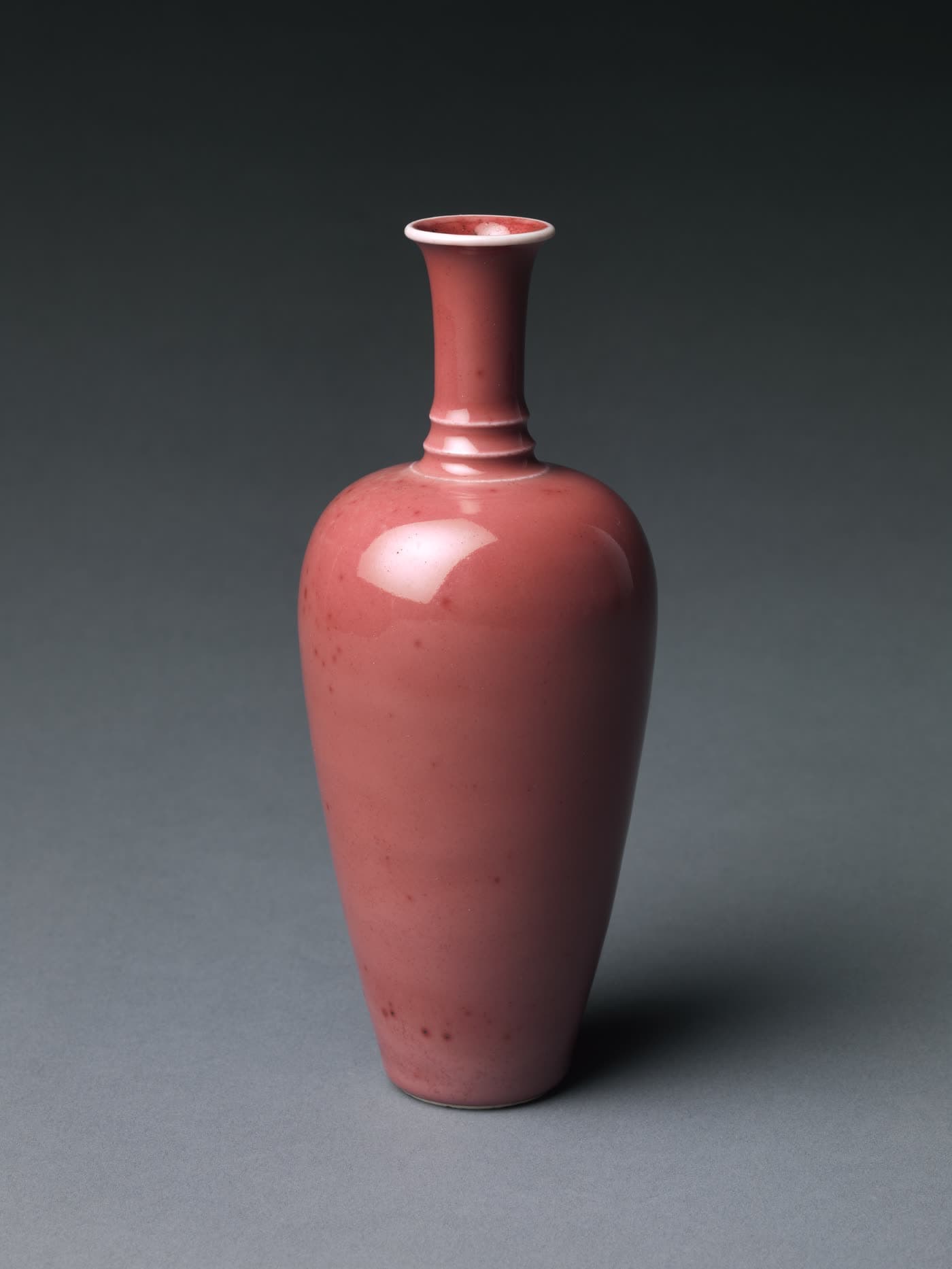
The Metropolitan Museum of Art places this porcelain vase in China and dates it 1678–88. It is Jingdezhen ware with a peach-bloom glaze. That range is the museum’s. No dynasty is named the peak. A second vase, also Jingdezhen ware with peach-bloom glaze, is dated by the Met 1713–22 and placed in China.
The vase is not an imperial seal, and it is not a portrait of the present government.
Vase with coiling dragon. China, 1678–88, in the Met’s date line. Bequest of Benjamin Altman, 1913. The Metropolitan Museum of Art · Open Access · public domain
05 · Turning
Turning
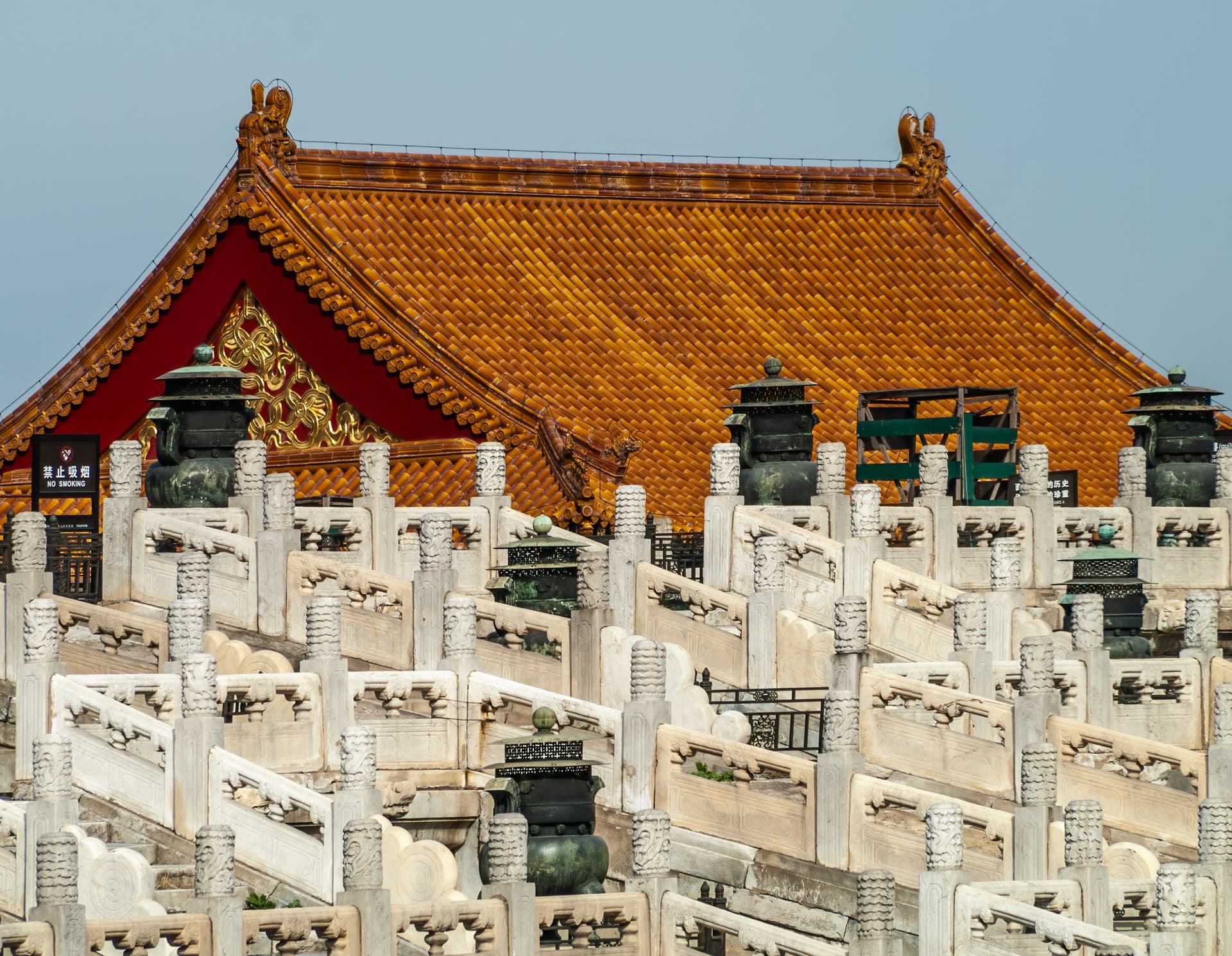
Conquest, collapse, and reform recur in the survey. The nineteenth and twentieth centuries include foreign pressure, revolution, and a change of regime. Causes are contested.
No war, treaty, or casualty figure is stated.
Terraces in the Forbidden City, Beijing. A photograph of the palace complex. It is not an imperial seal, and it is not a casualty count. CC BY-SA 4.0 · Ermell
06 · To the present
To the present
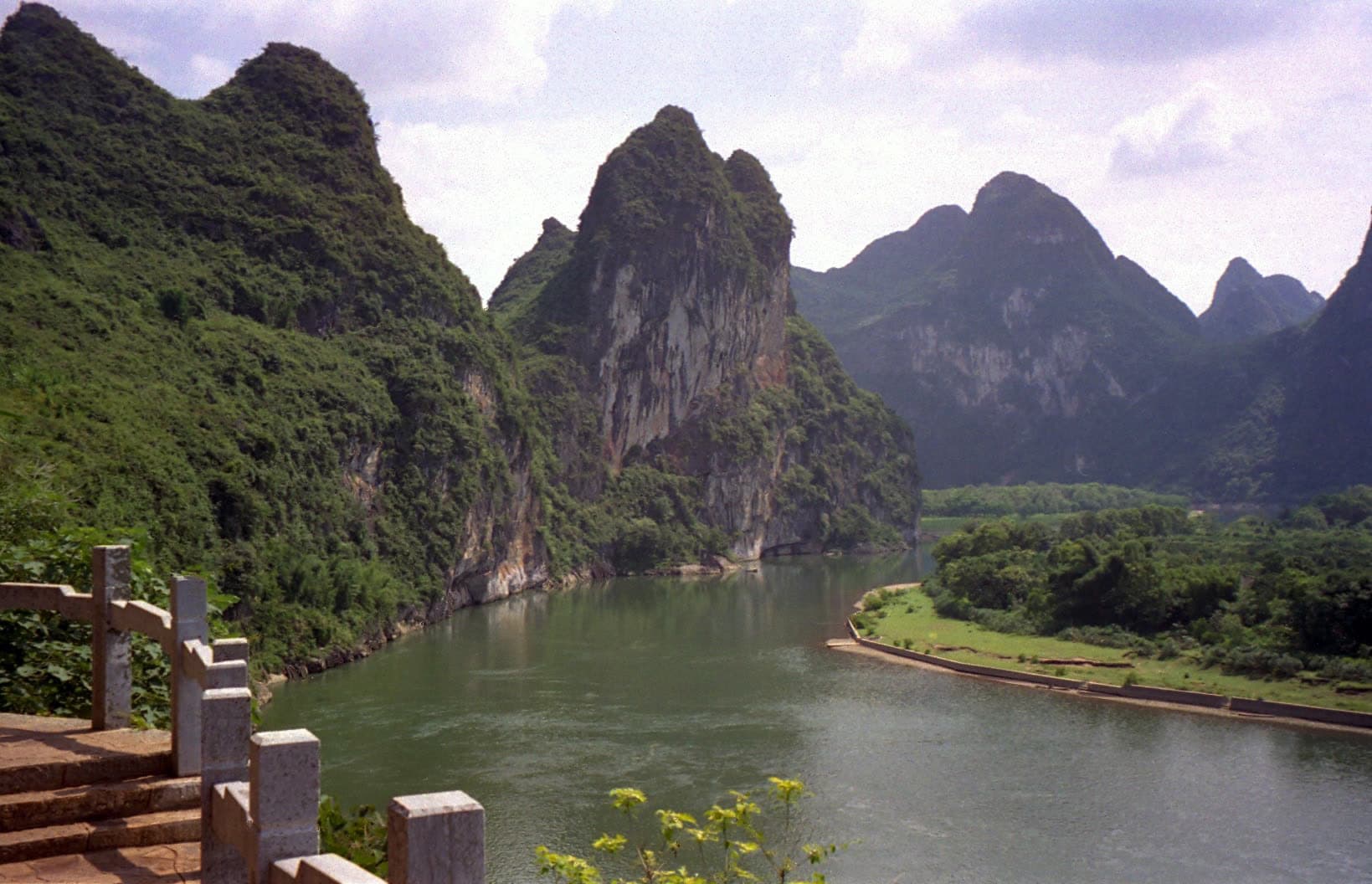
The People's Republic of China governs mainland China. What that power means for people living under it is disputed. This museum does not brief a side.
No law, leader, or present crisis is stated.
The Li River at Guilin, photographed in 1996. A landscape in China. Not a portrait of the present government. CC BY-SA 2.0 · Dan Lundberg