01 · Seal
Egypt
Ancient Egypt grew along the Nile. The Arab Republic of Egypt is the modern state on that river. They are not the same government. This room does not name a dynasty.
An original geometric mark for this room. It is not a historical seal, a flag, or an artifact. The opening is a film. Its credit is on the frame.
Les Pyramides, filmed by Alexandre Promio in 1897. Public domain. The Sphinx and the Great Pyramid of Giza. Twelve seconds from that film, silent. Not a dynasty chart. Public domain · Alexandre Promio, 1897
02 · Founding
Founding
Surveys place ancient Egyptian civilization along the Nile, with writing and centralized rule appearing in stages. Which reign counts as the founding is debated.
No unification date or king list is stated.
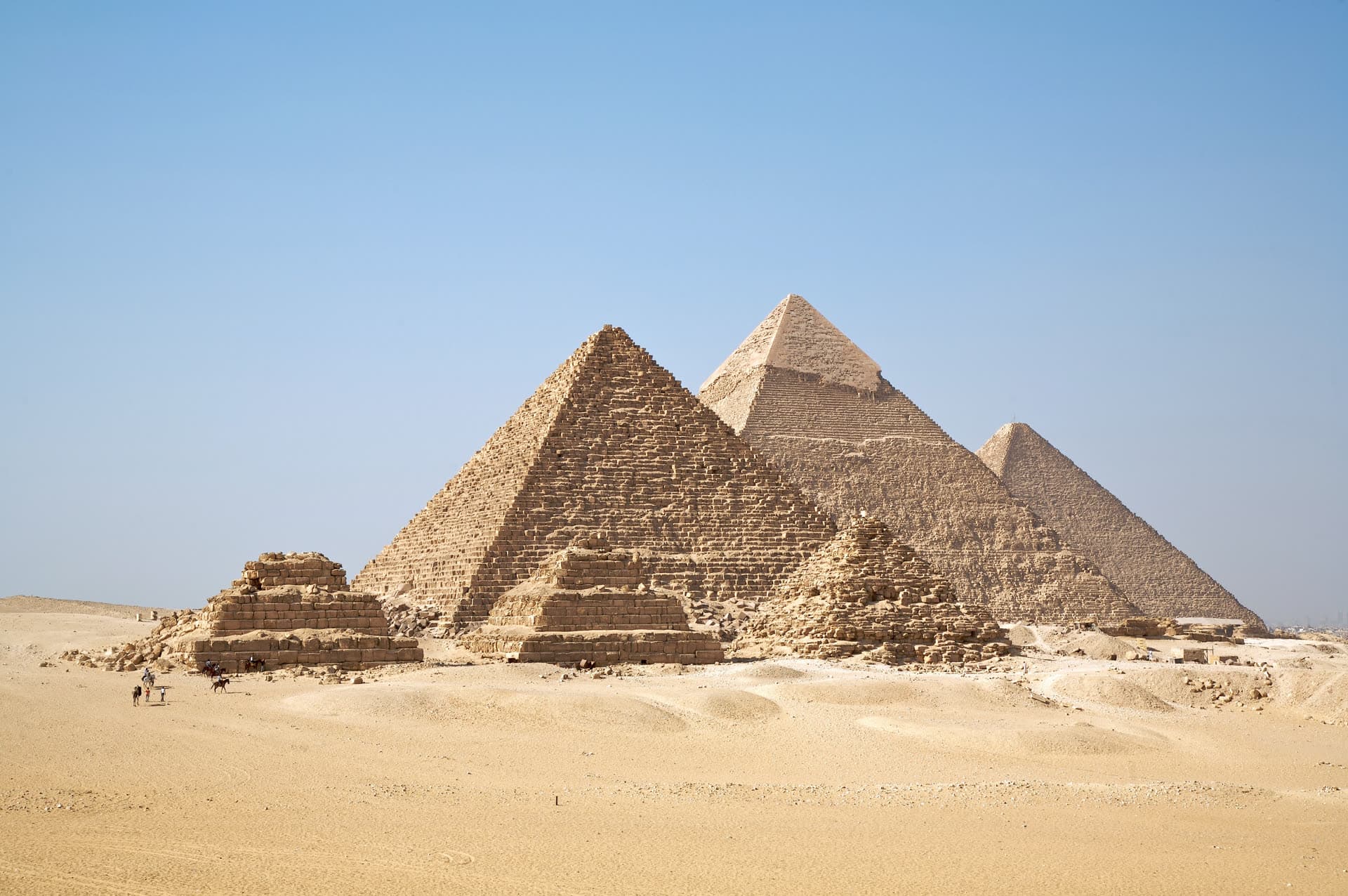
The pyramids at Giza. A modern photograph of the monuments. No king list is printed on this plate. CC BY-SA 2.0 · Ricardo Liberato
03 · Peak
Peak
Monumental building and long periods of court power are part of the survey. Calling one dynasty the height is an interpretation, not a fact this page will lock.
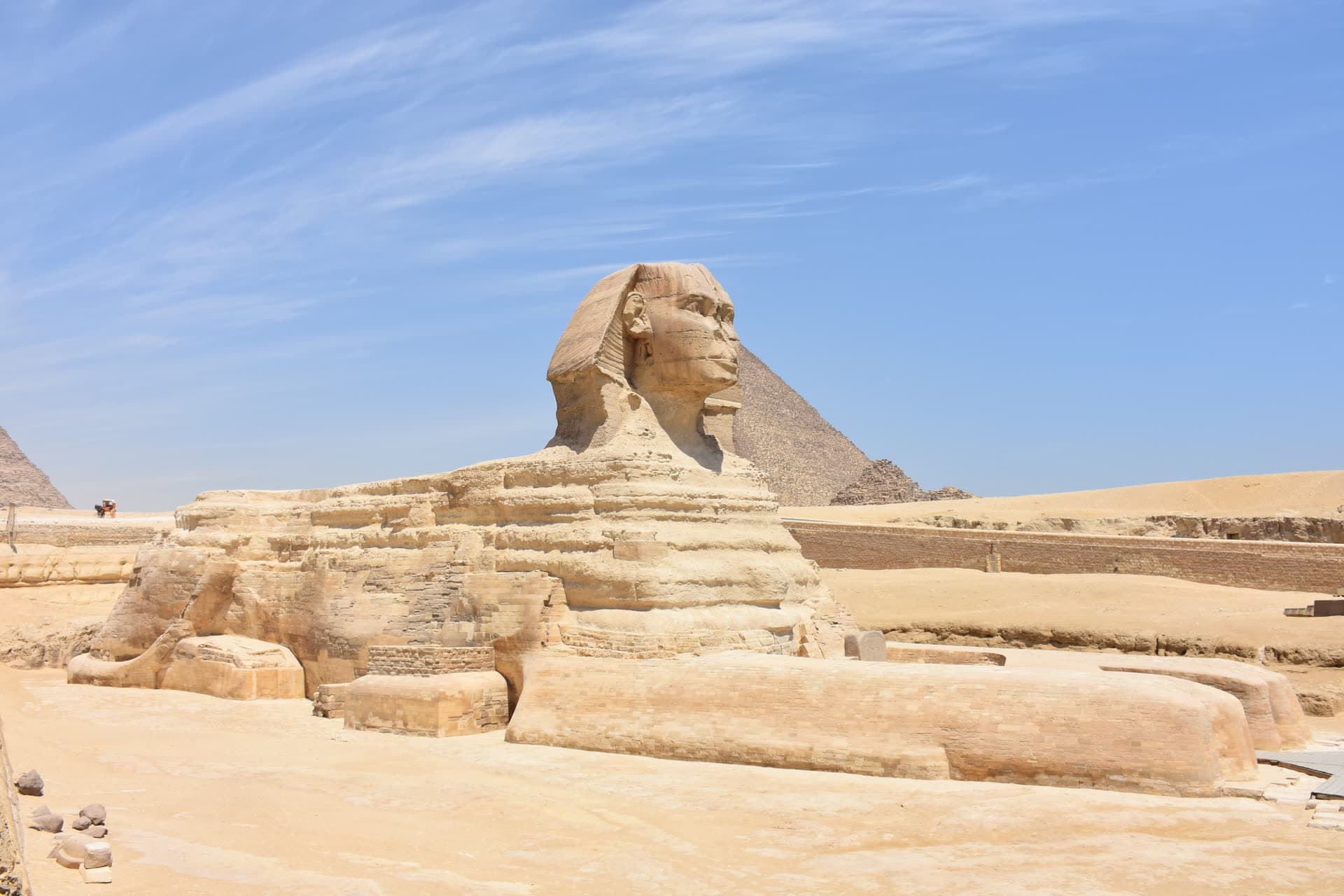
The photograph shows the Sphinx at Giza. It is not a verdict about which dynasty was the height.
The Great Sphinx at Giza, photographed in May 2015. A monument still in place. Not a dynasty chart. CC BY-SA 3.0 · MusikAnimal
04 · Object
Two objects
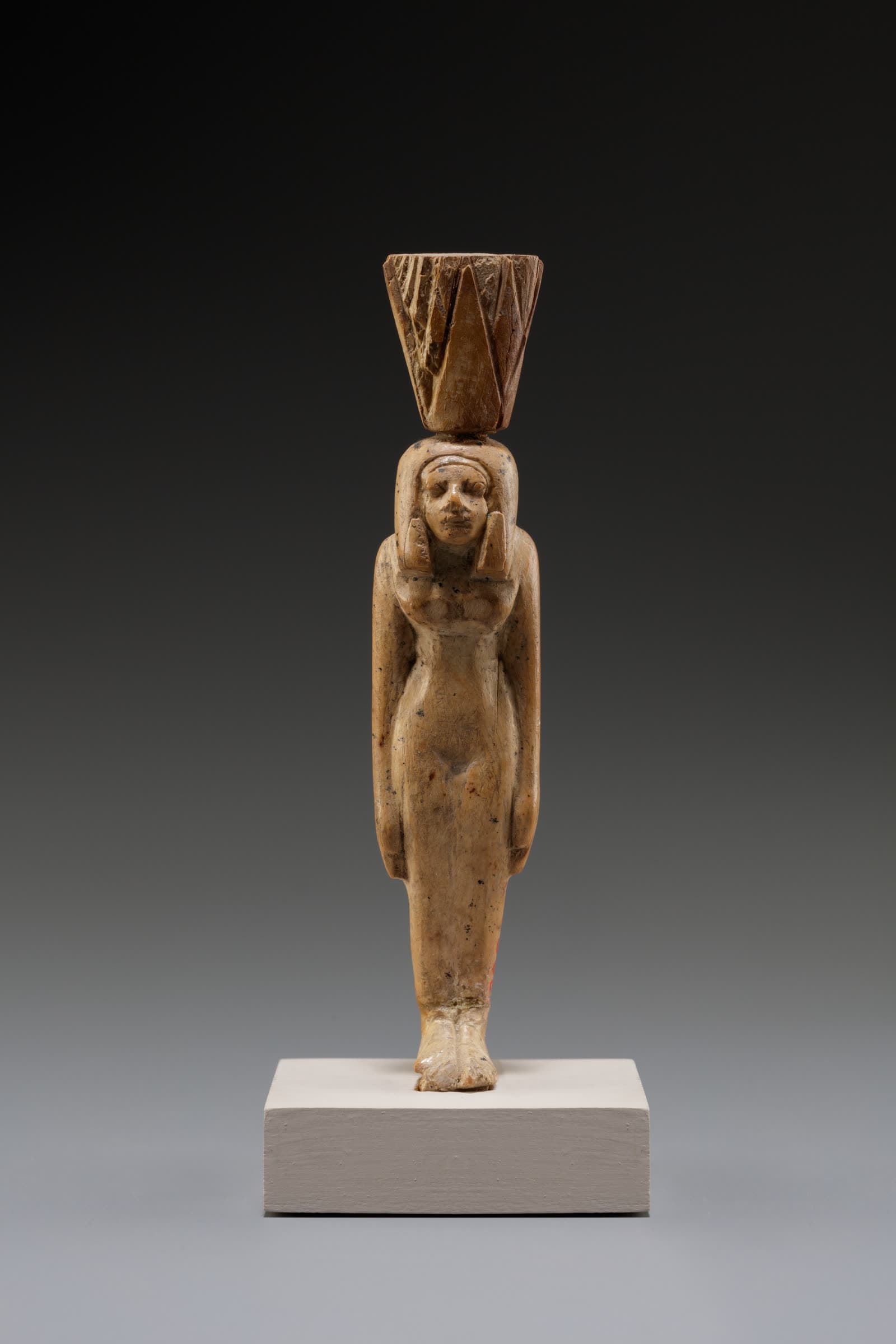
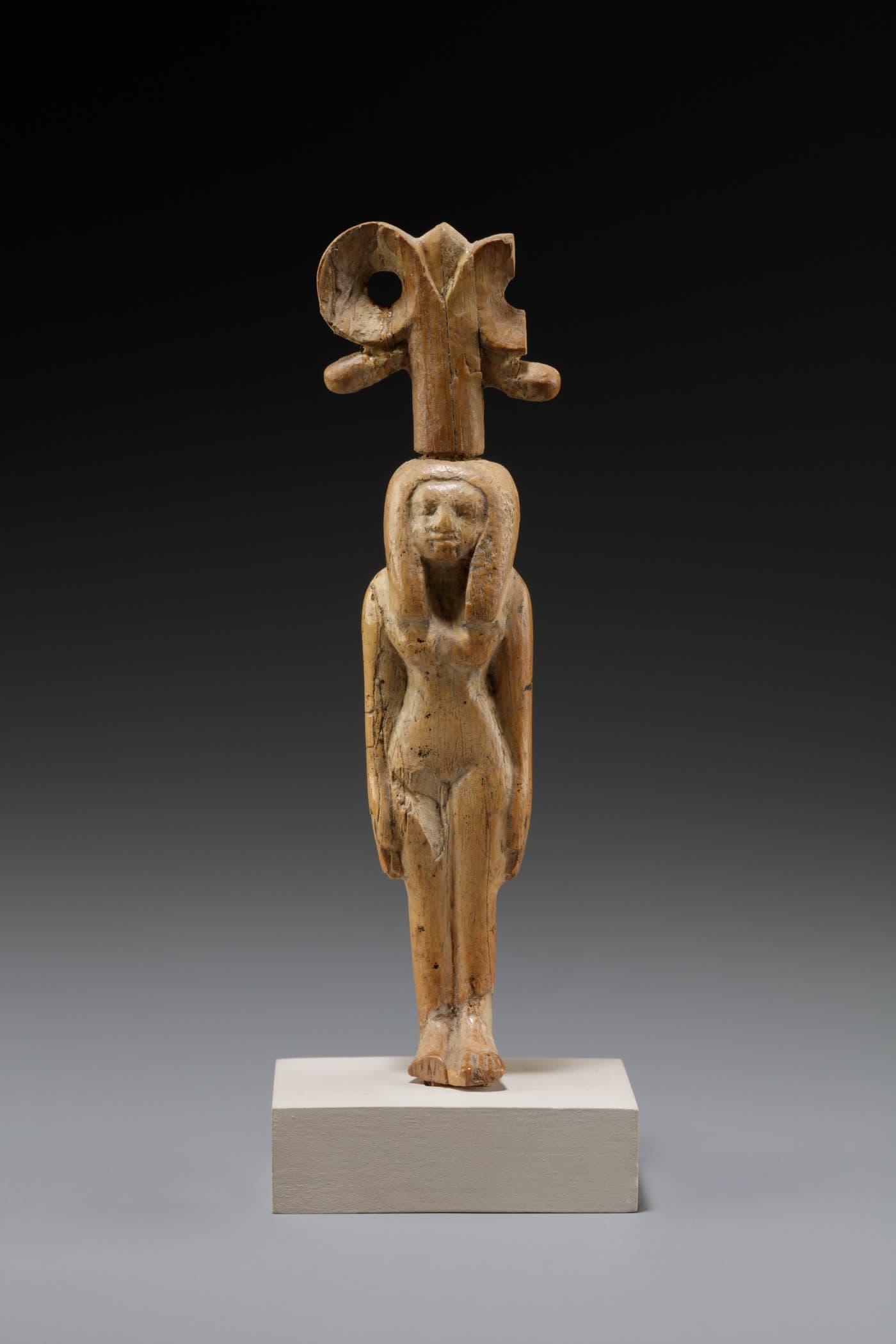
The Metropolitan Museum of Art titles this ivory figure “Goddess of Upper Egypt” and dates it about 1550–1300 BCE. That date line is the museum’s. Accession 22.9.4. No king list is printed here. A second ivory in the same 1922 gift is titled “Goddess of Lower Egypt.” The Met dates it about 1550–1300 BCE as well.
The figure is not a seal of the modern republic, and it is not a dynasty chart.
Goddess of Upper Egypt. Ivory. The Met’s date line is about 1550–1300 BCE. Gift of Edward S. Harkness, 1922. The Metropolitan Museum of Art · Open Access · public domain
05 · Turning
Turning
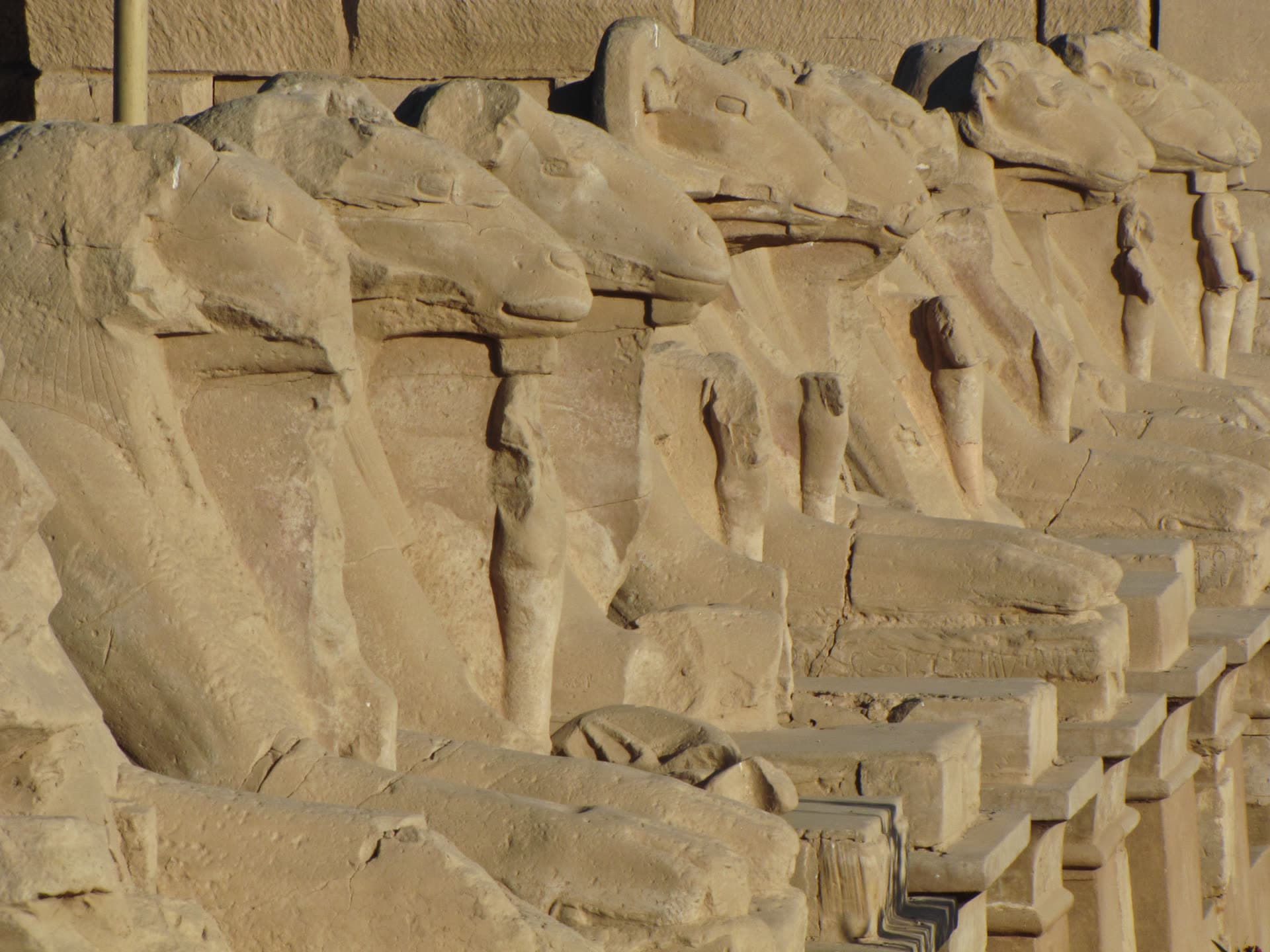
Outside powers conquered Egypt more than once. Persian, Macedonian, and Roman rule are survey topics, as are later Islamic and Ottoman centuries. The order is not narrated here.
No campaign is stated. Beliefs of those centuries are not ranked.
Karnak. A photograph of the temple complex. Conquests are cited in the text and not reenacted here. CC BY-SA 3.0 · Luiz Mello
06 · To the present
To the present
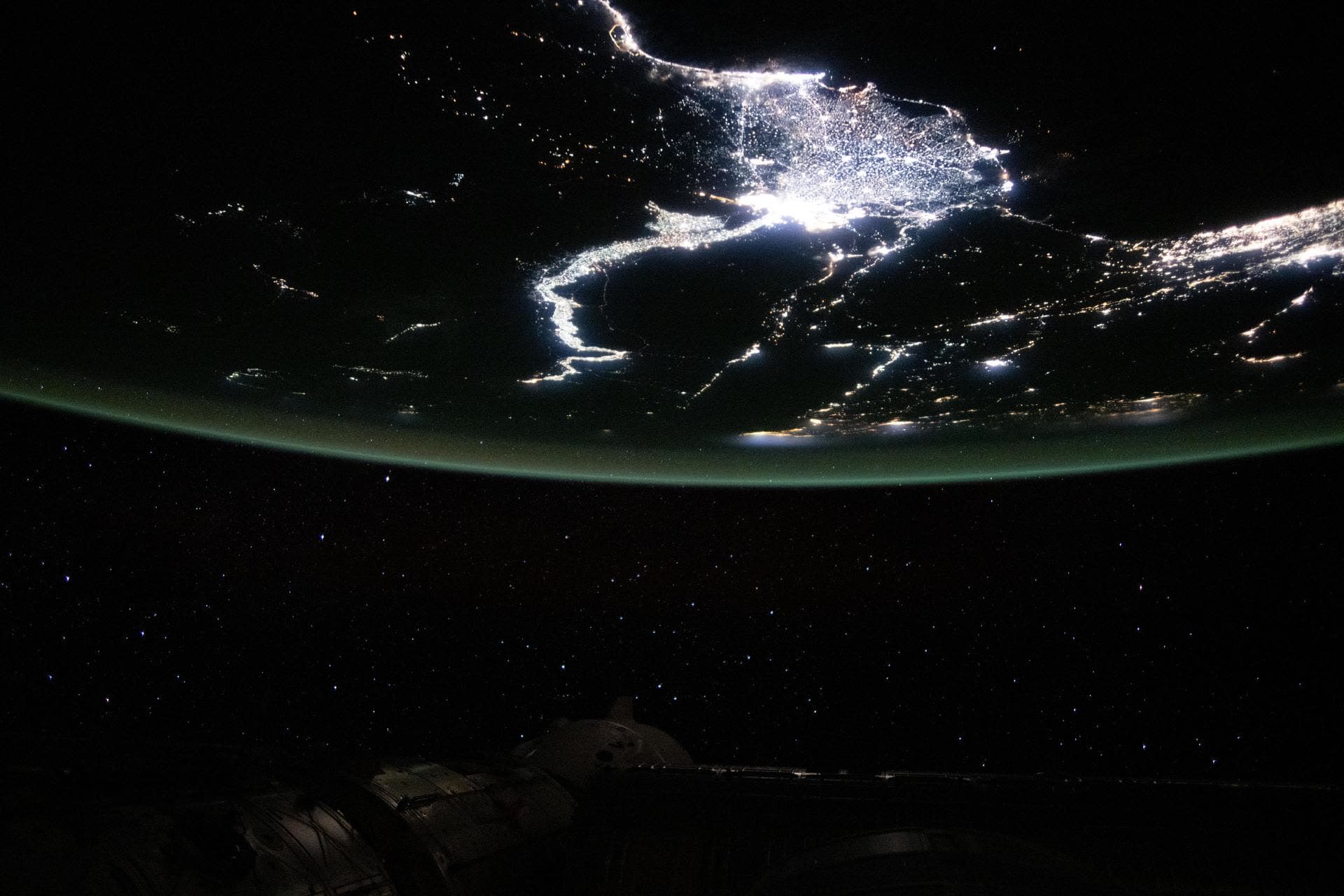
The modern republic sits on much of the same land and uses the name Egypt. The path through monarchy and republic is a separate political history. It is not pharaonic Egypt continued in secret.
No constitution, leader, or year is stated.
The Nile Delta at night, from the International Space Station, 22 March 2025. NASA image iss072e905240. Cities trace the river. The photograph is modern. NASA · public domain · iss072e905240