01 · Seal
India
The Indian subcontinent held many states, languages, and traditions. The Republic of India is one modern country on that land, not the only one, and not a single ancient empire under a new flag.
An original geometric mark for this room. It is not a historical seal, a flag, or an artifact. This opening is a still, moved slowly as you scroll. A film for this seal is not in the library yet.
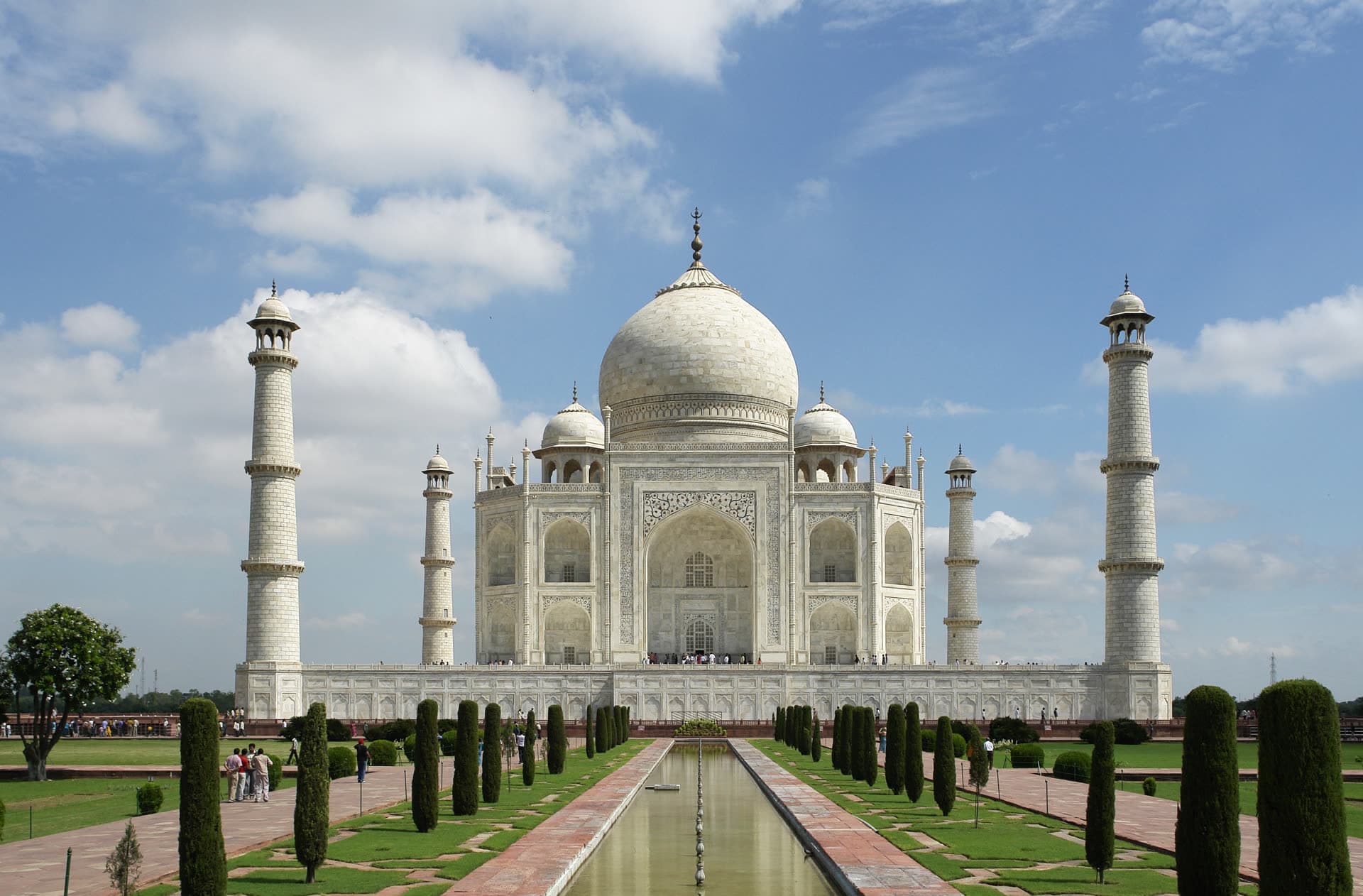
The Taj Mahal in Agra, a Mughal mausoleum. The photograph is not a ranking of empires. CC BY-SA 4.0 · Yann; edited by Jim Carter
02 · Founding
Founding
There is no one founding of India in the surveys. Cities, kingdoms, and religious traditions arise in different regions. Treating them as one biography is a frame, and it is labeled as such.
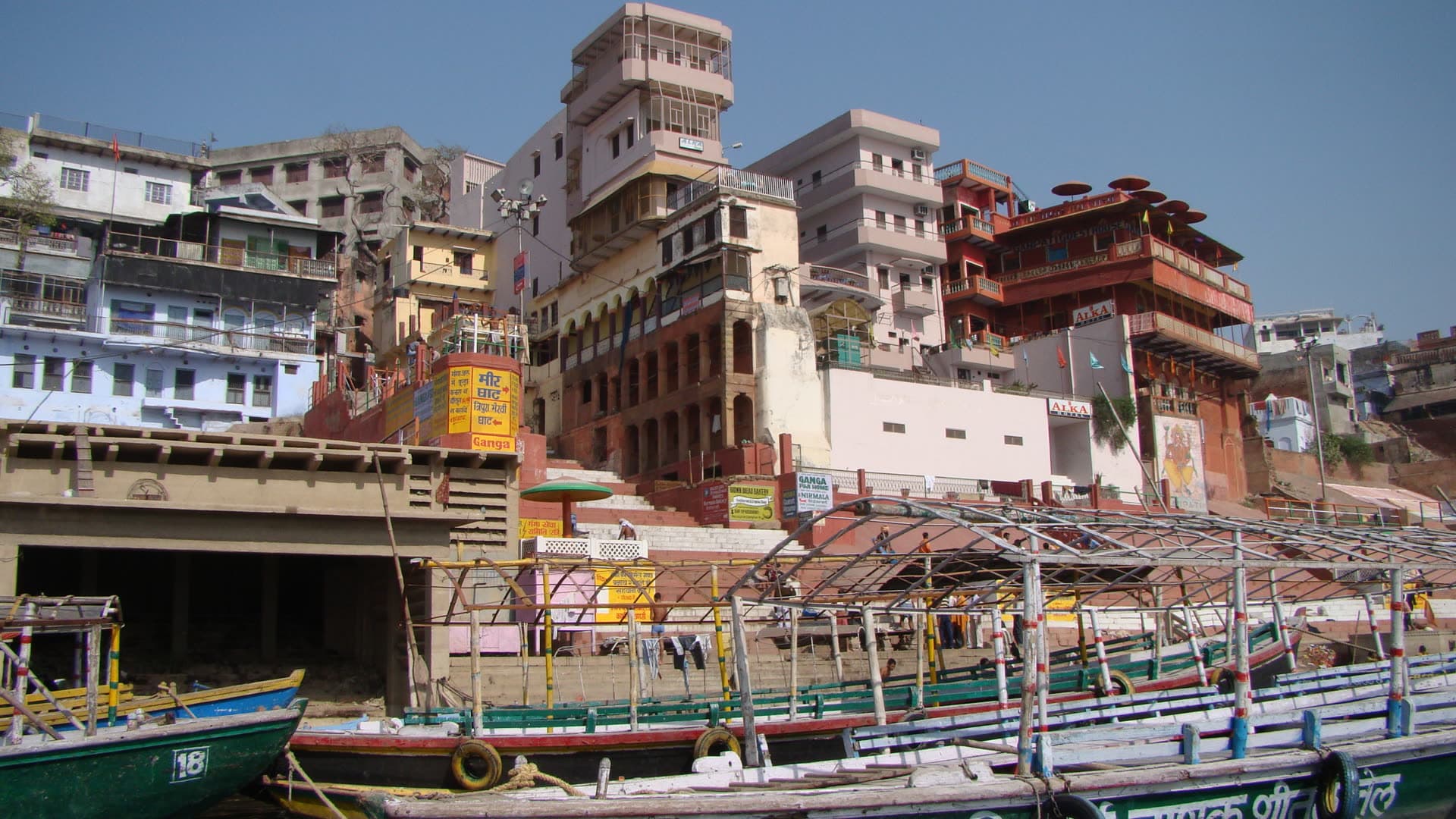
No single founding city is named. The photograph is the ghats at Varanasi, not a start date.
Ghats at Varanasi on the Ganges. A modern photograph of a river city. It is not a single founding date for the subcontinent. CC BY 2.0 · VasenkaPhotography
03 · Peak
Peak
Wide-ruling states appear more than once. Which of them was the height depends on the question: territory, learning, or court art. This page does not elect one.
The photograph is the Taj Mahal in Agra. It is not a ranking of empires.
The Taj Mahal in Agra, a Mughal mausoleum. The photograph is not a ranking of empires. CC BY-SA 4.0 · Yann; edited by Jim Carter
04 · Object
Two objects
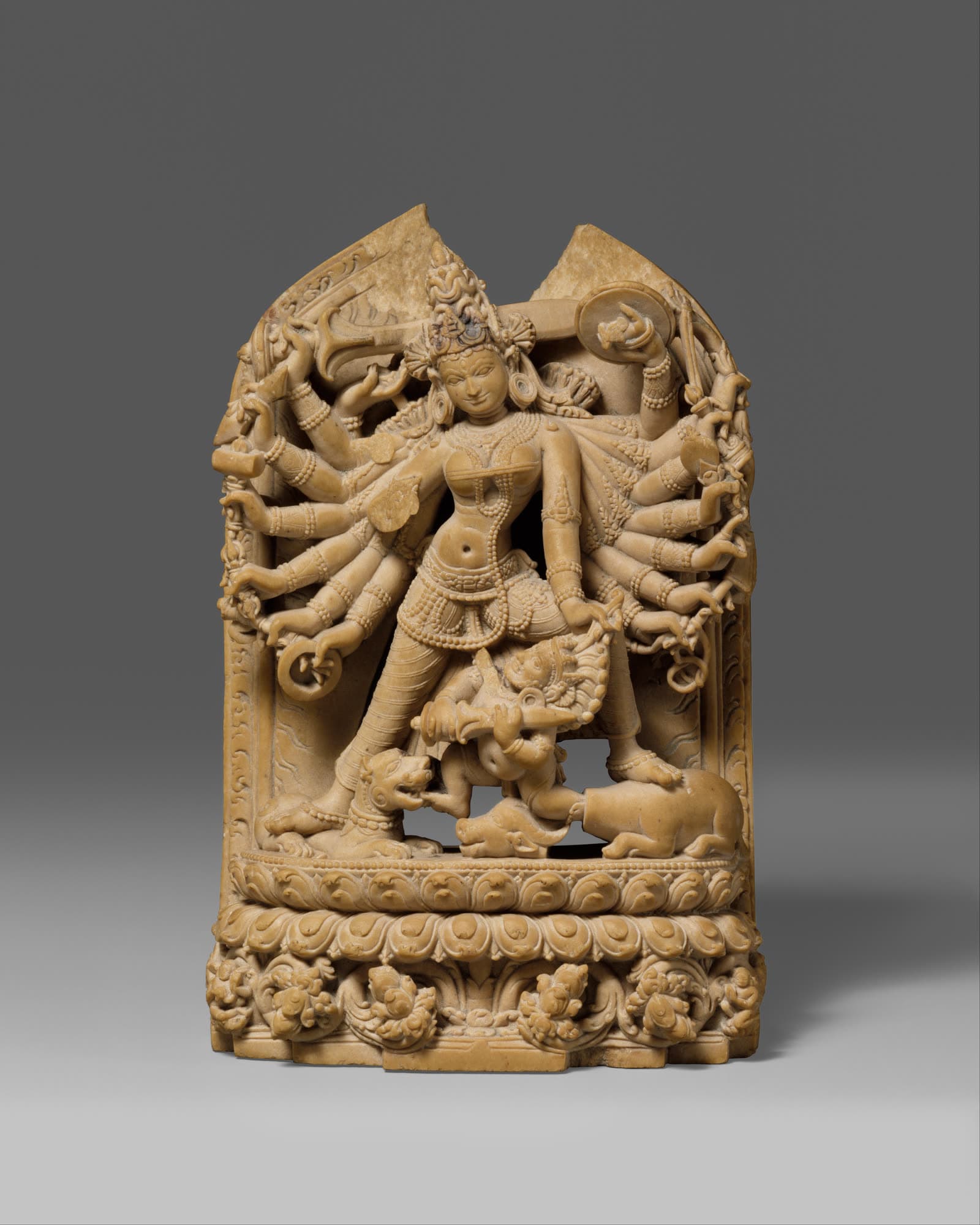
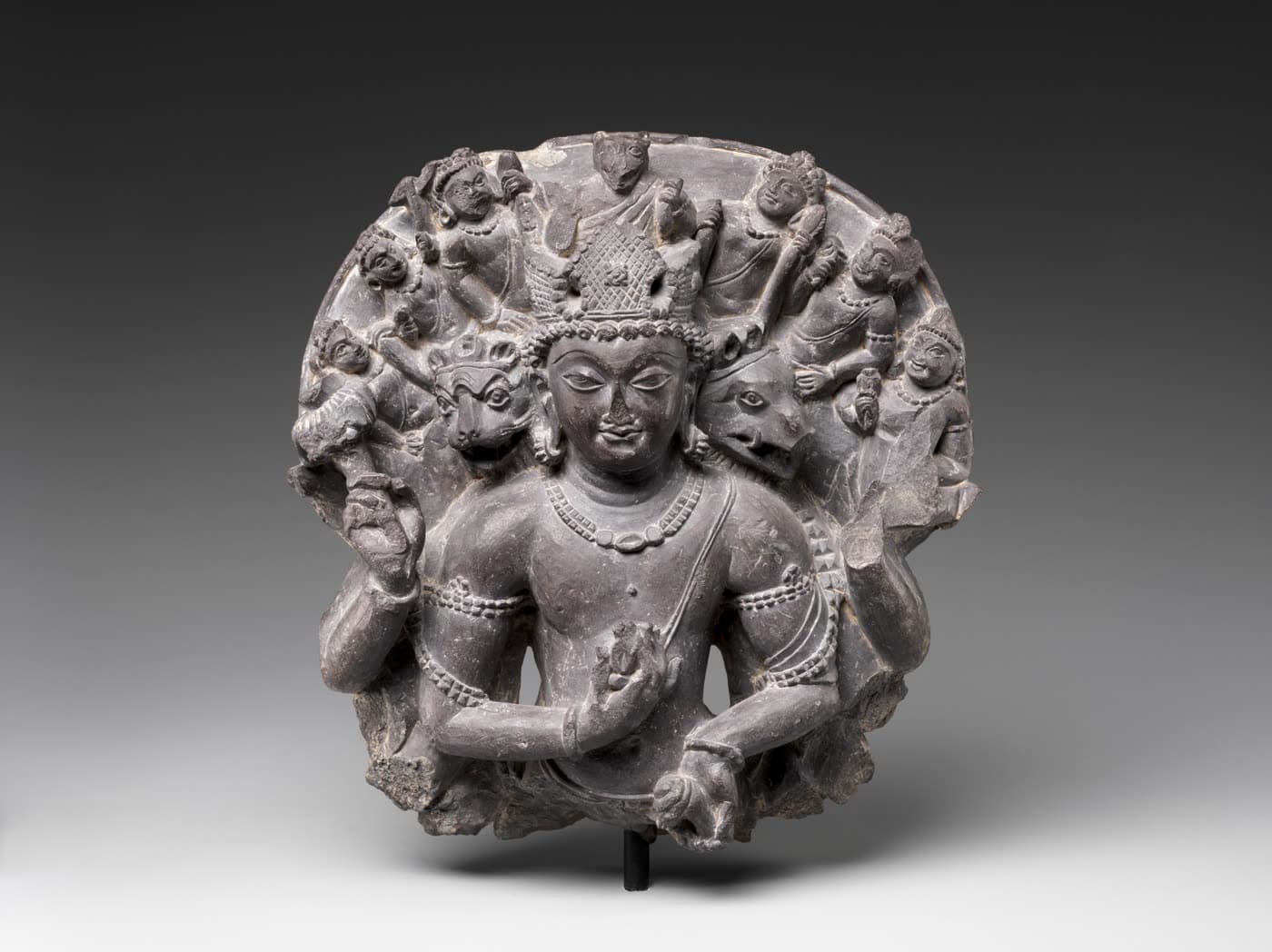
The Metropolitan Museum of Art titles this argillite sculpture “The Goddess Durga Slaying the Demon Buffalo Mahisha,” 12th century, and places it in Bangladesh or India (Bengal). The geography is the museum’s alternative, not a single founding. A second sculpture is Vishvarupa Vishnu, stone, 6th century. The Met places it in India, in Jammu and Kashmir, the ancient kingdom of Kashmir.
The sculpture is not the Republic of India, and it does not rank a faith.
Durga and Mahisha. 12th century. Bangladesh or India (Bengal), as the Met states it. Purchase, Diana L. and Arthur G. Altschul Gift, 1993. The Metropolitan Museum of Art · Open Access · public domain
05 · Turning
Turning
British colonial rule, and the end of that rule, are survey topics. The division of British India created more than one modern state. Violence in that division is documented and is not retold here, and it is not blamed on a faith as a people.
No year, border, or count is stated.
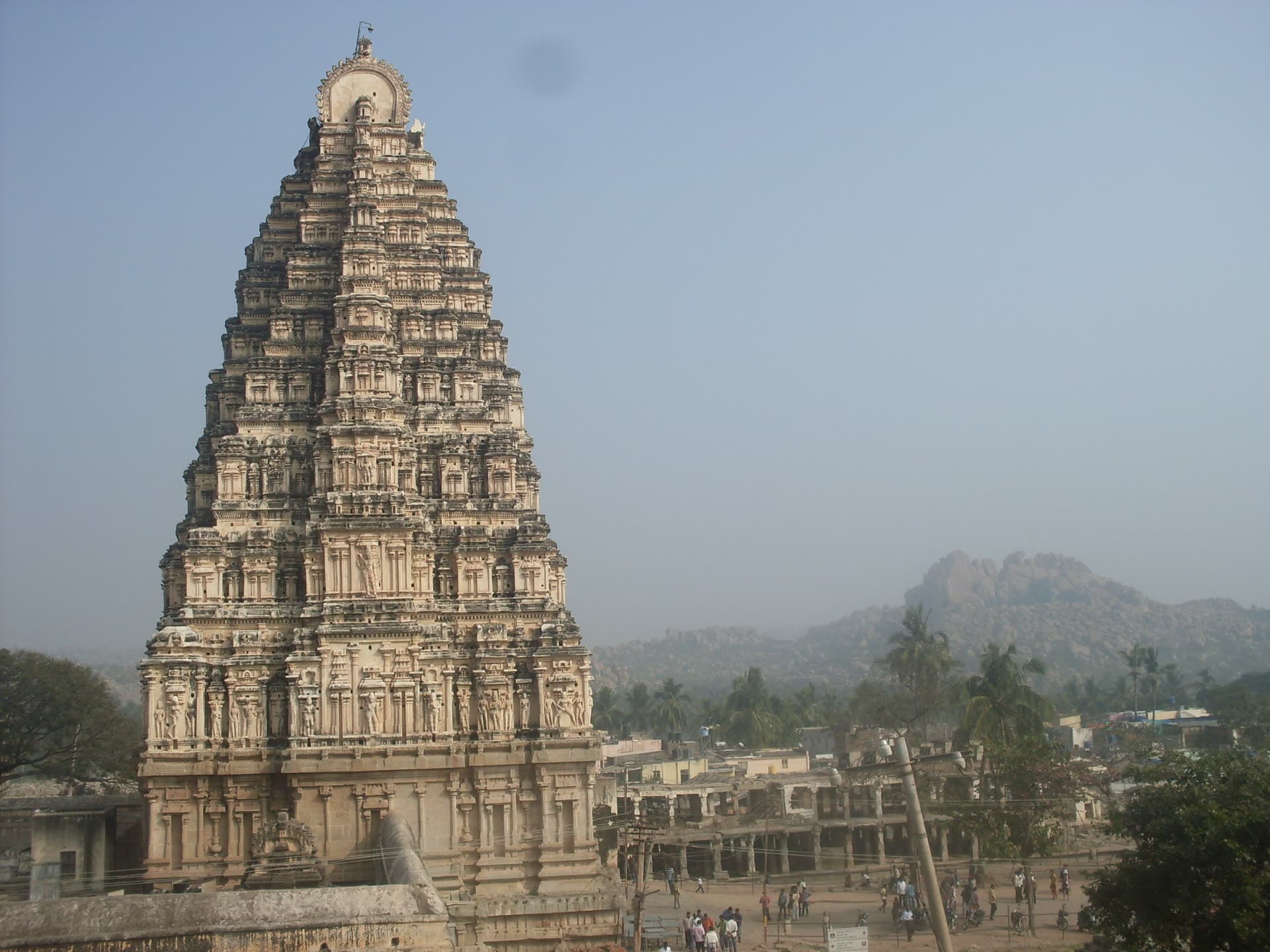
The Virupaksha temple at Hampi. A photograph of a temple beside a ruined capital. This page does not elect it as the height of India. CC BY-SA 4.0 · Arunkm44
06 · To the present
To the present
The Republic of India is the modern country this seal names. Neighboring states have their own histories. Civic structure and elections need a primer before they are described.
No party is the museum's voice.
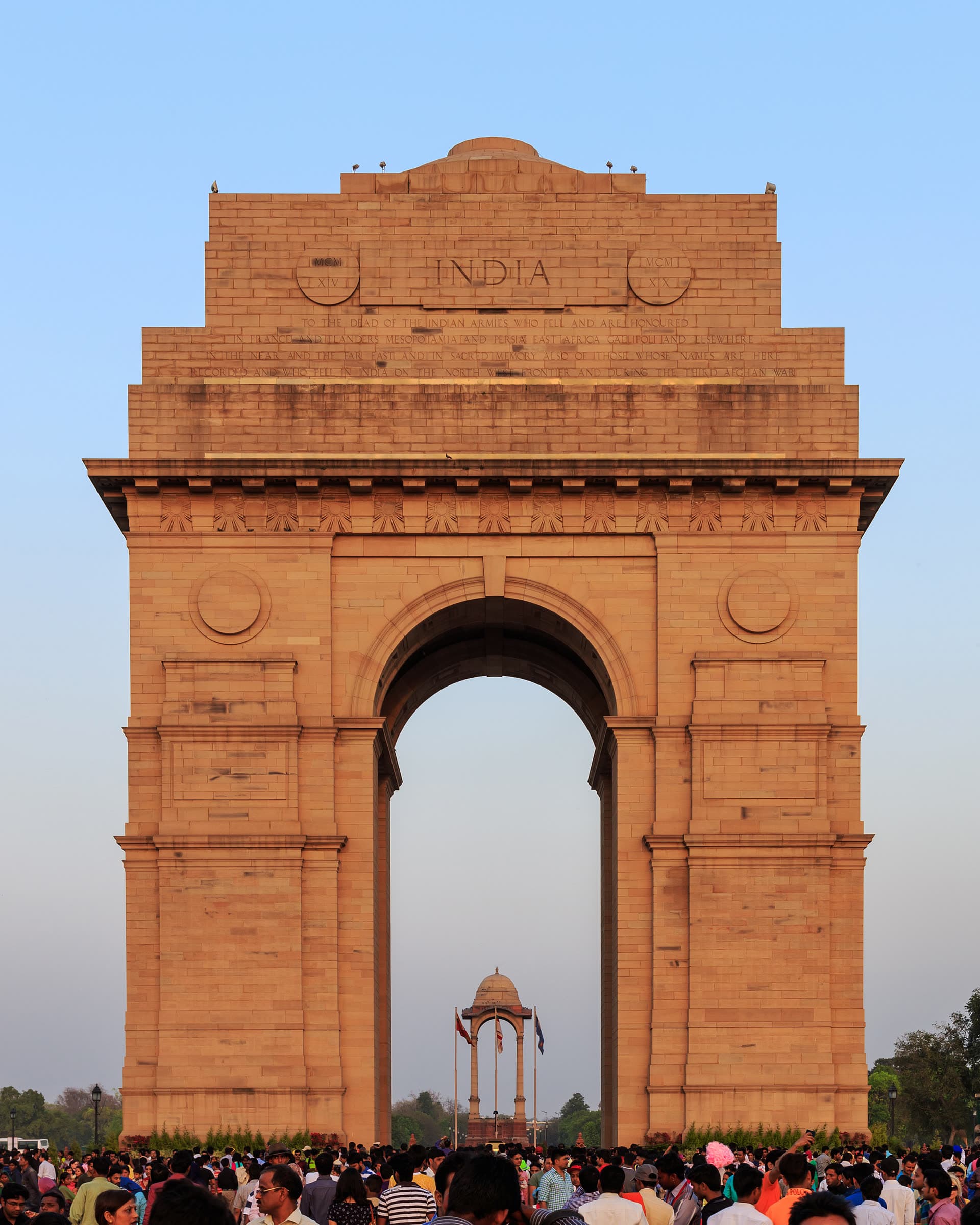
India Gate in New Delhi, a twentieth-century memorial. Colonial rule and the division of British India are cited in the text, not settled by this picture. Free Art License · A.Savin